Movement, Brain Development & Learning.

Movement is more than physical activity. In the early years, purposeful movement gives children opportunities to coordinate their bodies, respond to information, remember instructions, solve movement challenges and participate actively in learning.

The body and brain develop together

Young children learn through movement and experience. They watch, listen, touch, move, repeat, adjust and try again. 

A simple activity may require a child to balance and at the same time listen to an instruction, remember what comes next, judge where their body is in space, change direction, control an object or respond to another person. The body is moving, and the child is also paying attention, processing information and making decisions.

Research examining physical activity and children’s cognition suggests that movement supports the development of executive function, including attention, inhibitory control and working memory. 

Movement involves thinking, remembering and responding

Purposeful movement is not only about completing a physical action. Many activities ask children to take in information and use it while they move.

Remember

Children may need to remember an instruction, a rule, a movement sequence or what to do with a piece of equipment. This uses working memory — the ability to hold information in mind while using it.

Plan

A movement challenge can ask a child to work out what their body needs to do next: how to move around an obstacle, where to place a foot, how much force to use or which action comes next.

Respond

Children can listen for a cue, watch a demonstration, react to a partner, track a moving object or change what they are doing when the instruction changes.

Adapt

If a task changes, children may need to adjust their speed, direction, balance, force, equipment or movement strategy and try again.

LISTEN
→
REMEMBER
→
PLAN
→
MOVE
→
ADJUST
→
REPEAT

Movement can become part of the learning experience

Movement and classroom learning do not need to compete for time. Educators can use movement in different ways throughout the day — as a dedicated movement session, a short movement break, or as part of an activity that also includes language, counting, sequencing or spatial concepts.
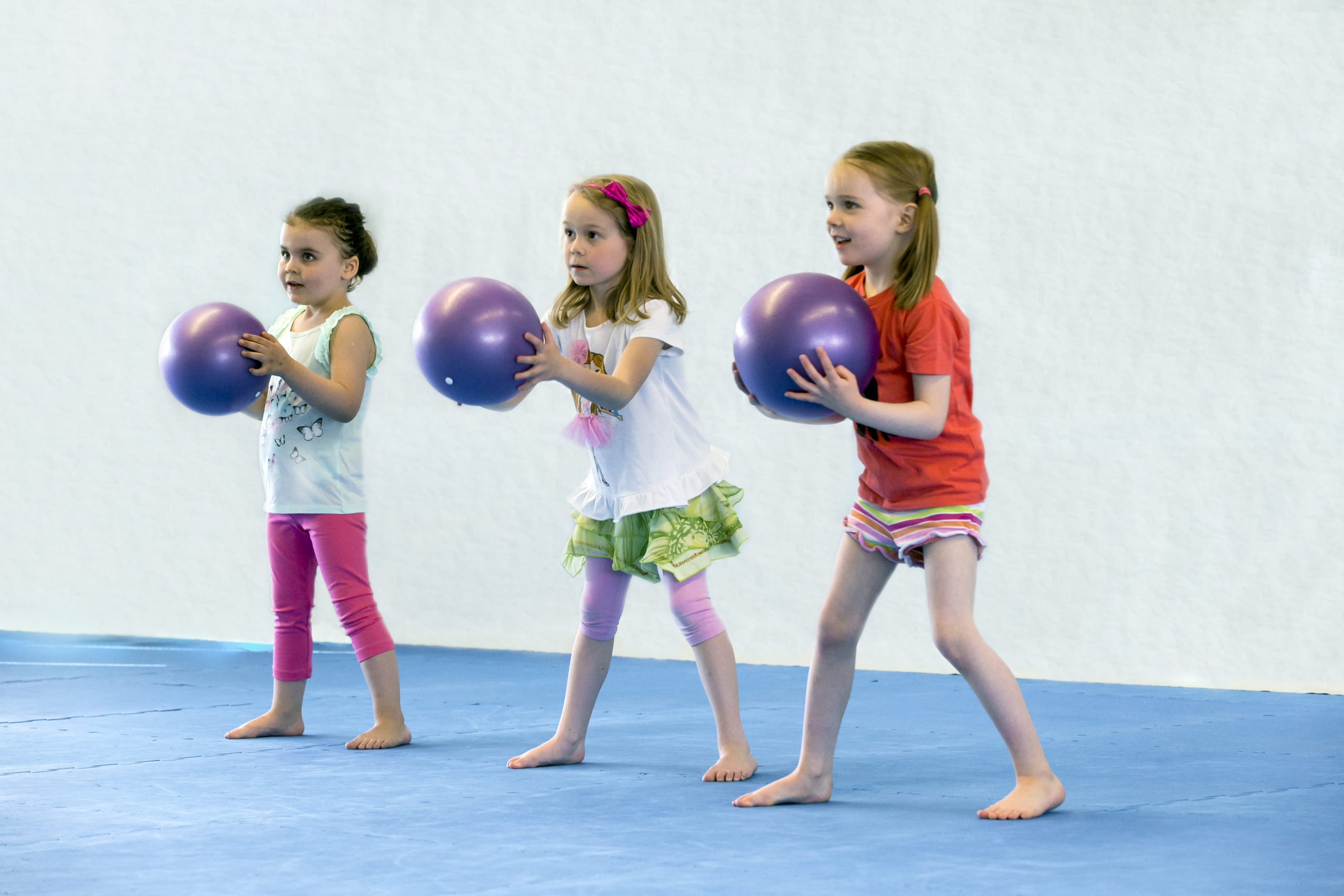
LANGUAGE ACQUISITION

Movement activities can introduce and reinforce language such as over, under, behind, beside, around, forward and backward. Children can listen to instructions, follow a sequence, copy actions, describe movement and respond to verbal or visual cues.
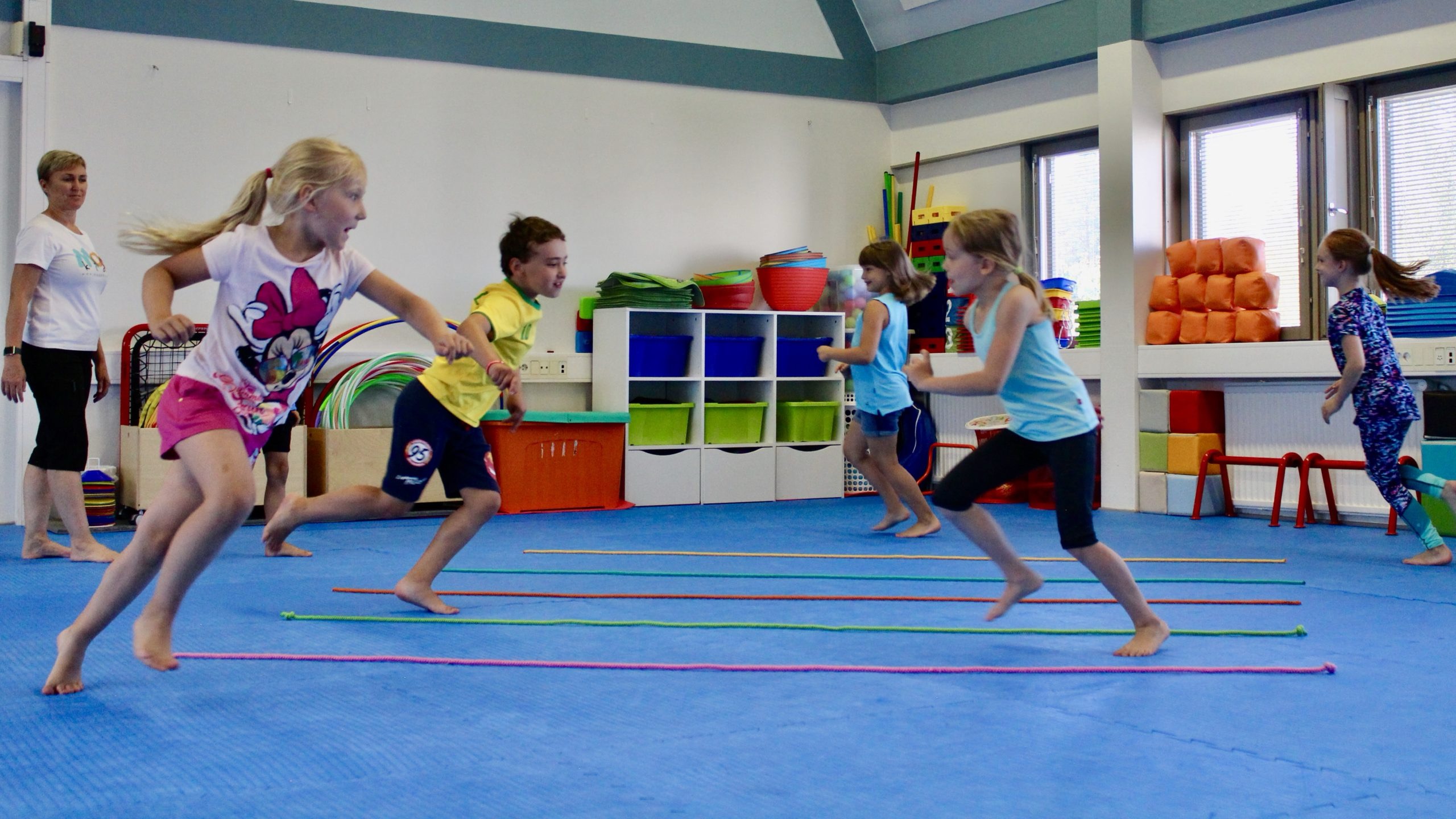
Early numeracy

Counting and simple mathematical ideas can be built naturally into movement: jump five times, collect three beanbags, make two turns, move to the second hoop, or compare fast and slow, near and far, high and low.
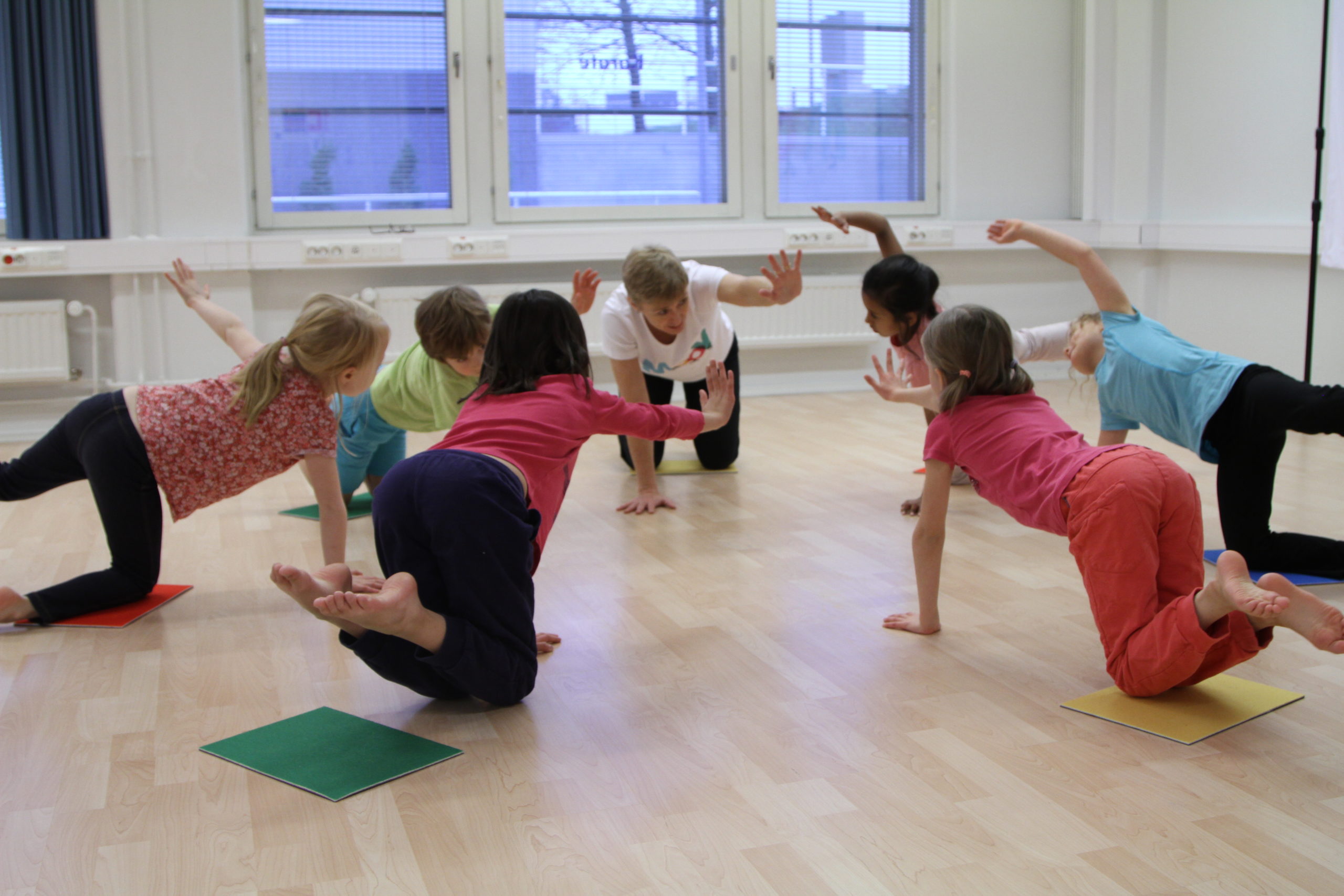
Memory and following instructions

A child might be asked to jump twice, turn around, collect a beanbag and place it in a hoop. Remembering and carrying out the sequence makes working memory part of the movement task.
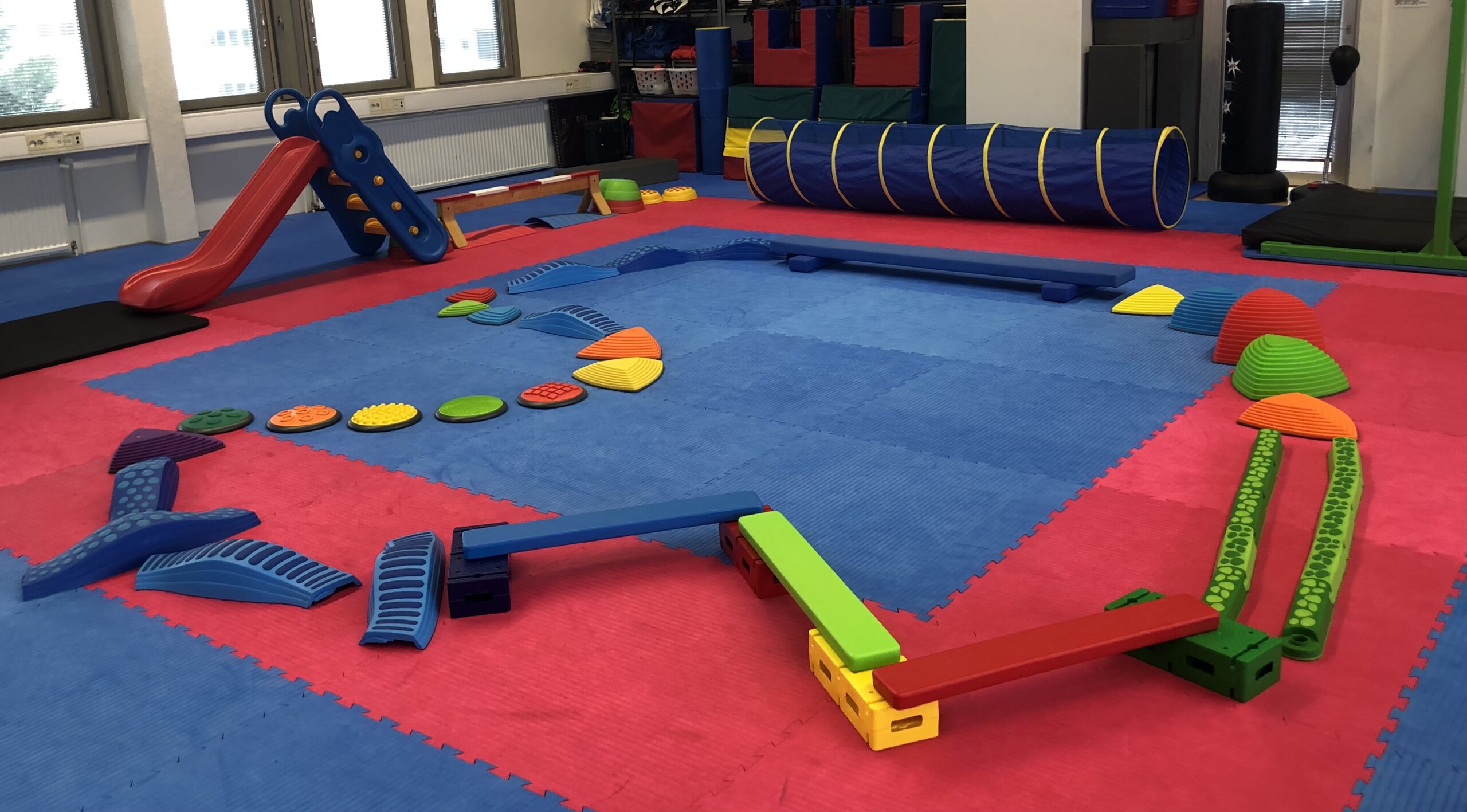
Problem solving

Obstacle courses, partner activities, ball skills and movement circuits can create practical problems for children to solve: Where should I move? How can I keep my balance? How hard should I roll the ball? What needs to change if my first attempt does not work?
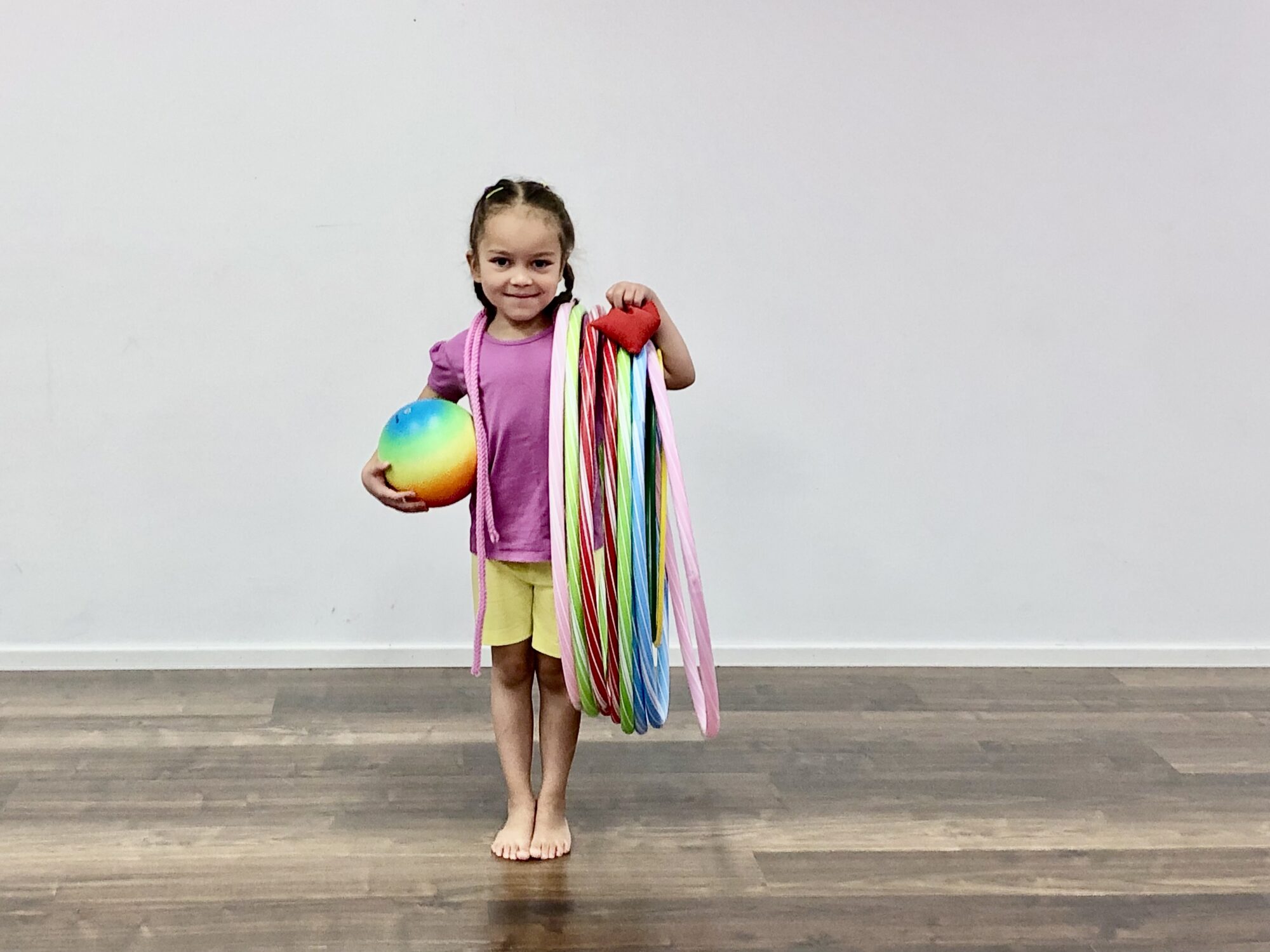
Research links early physical development directly to future learning.

Expecting early learners to focus on seated academic tasks without adequate movement-based preparation forces the brain to compensate for unformed physical foundations. Movement isn’t a break from learning. It is the physical baseline that makes classroom learning possible.

A child’s brain and nervous system build cognitive abilities from physical and sensory experiences. Cognitive science calls this concept embodied cognition.
For this to happen, children need opportunities to move in a wide variety of ways and at a time when their brains are optimized for learning. 

From Movement to Mind: How Motor Skills Build Classroom Success

Through diverse, playful movement experiences,
children build the essential motor skills that support future learning.
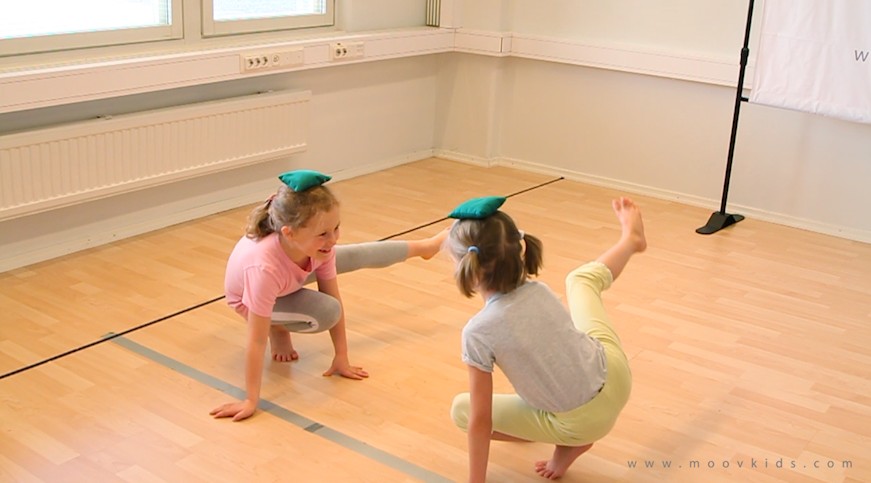
Static and dynamic balance activities

Static/Dynamic Balance

Stationary Balance With a Partner As a Group
Stopping Dodging Landing
Jumping Tumbling Reacting

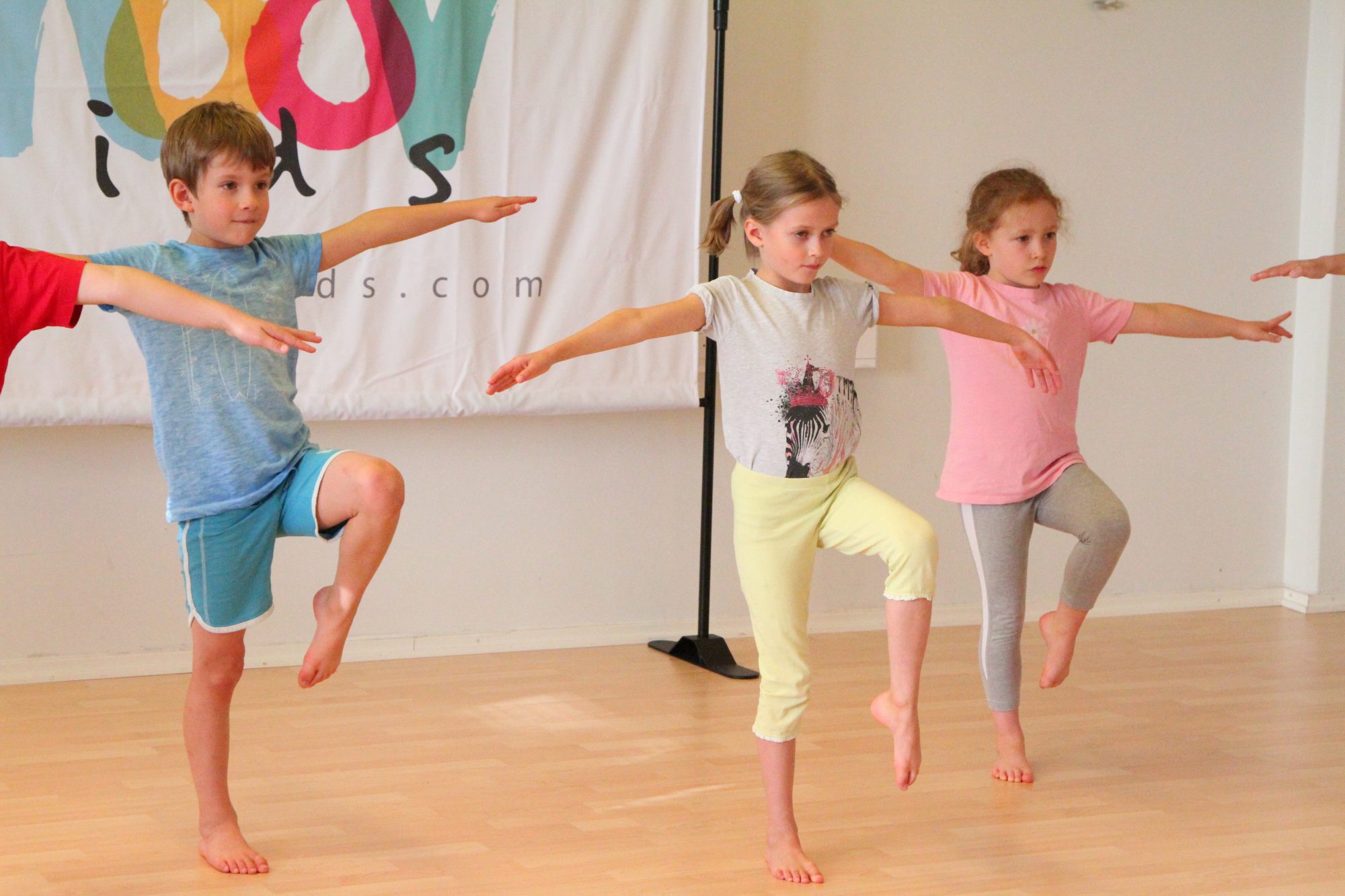
Static balance builds core stability, reducing fatigue and fidgeting from the physical effort of sitting at a desk. Dynamic balance stimulates the vestibular system to regulate the nervous system, keeping students alert. Balance activities stabilize vision, keeping eyes focused when reading text or copying notes from a board.
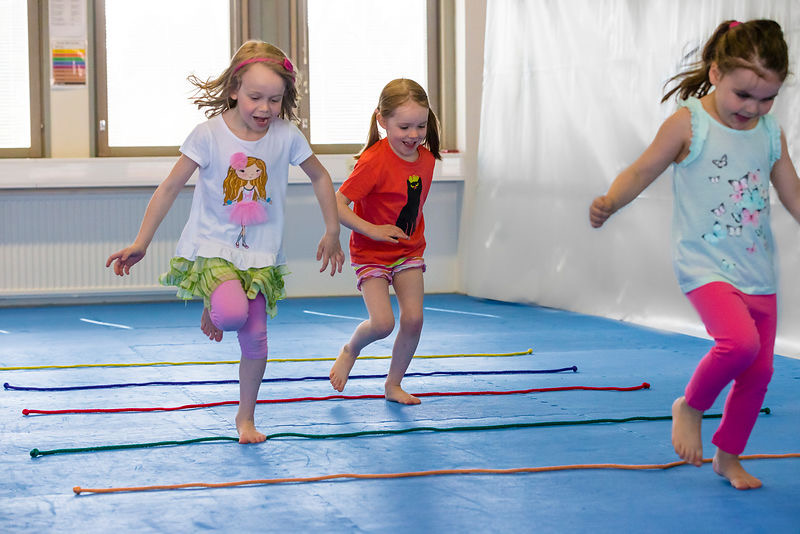
Locomotive skills activities

Locomotive Skills

Jumping Leaping Galloping
Hopping Strides Skipping
Sliding Running Hopscotch

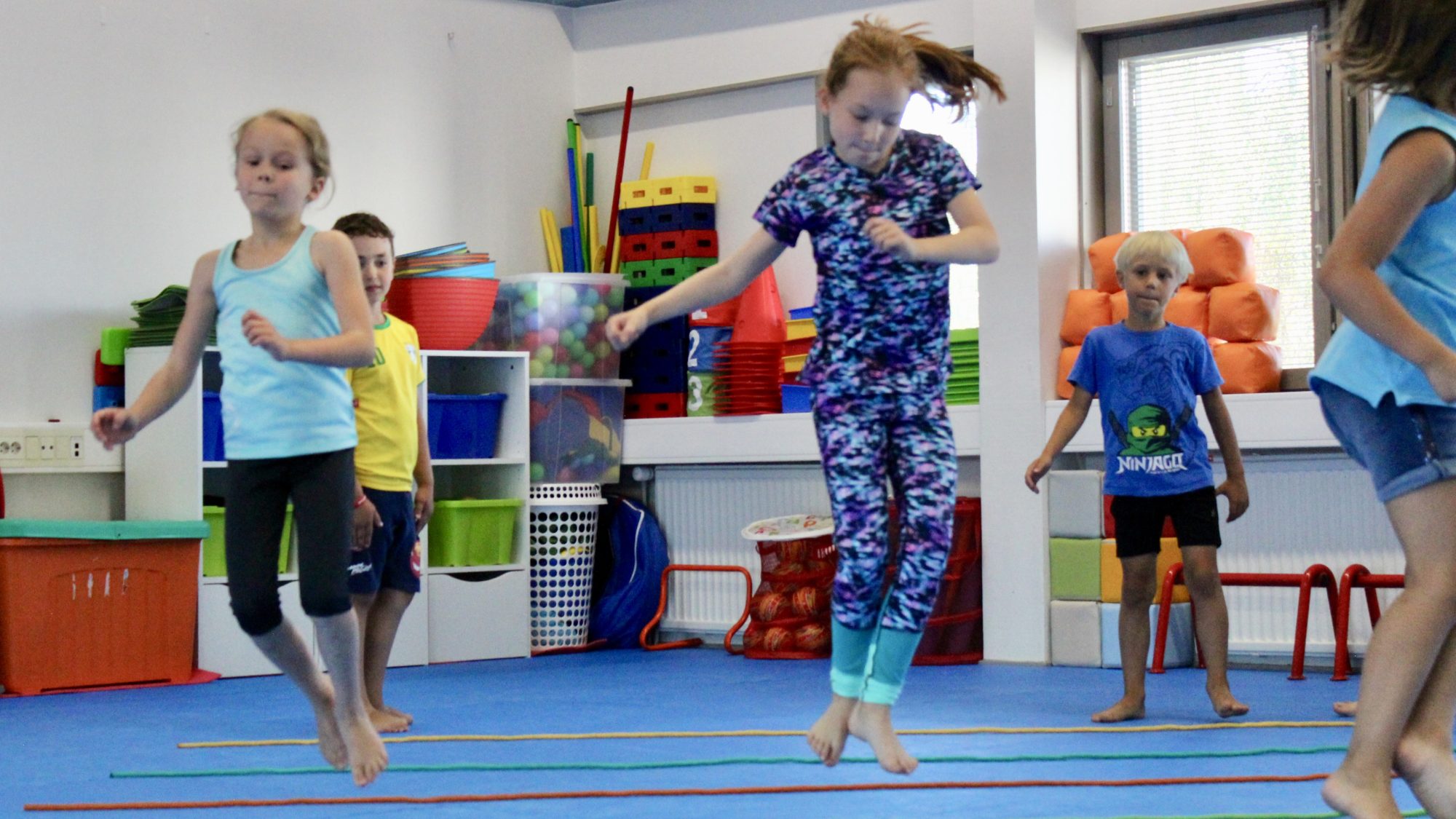
Cross-lateral movements (like skipping or crawling) coordinate both brain hemispheres, enabling smooth left-to-right reading and fluid handwriting. Rhythmic locomotion helps children internalize timing and sequencing patterns essential for phonological awareness and language processing.
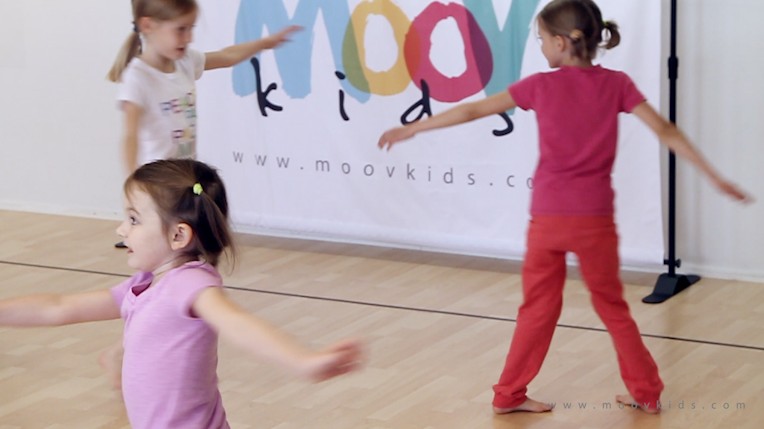
Axial stability activities

Axial Stability

Bending Rolling
Twisting Swinging
Turning Spinning

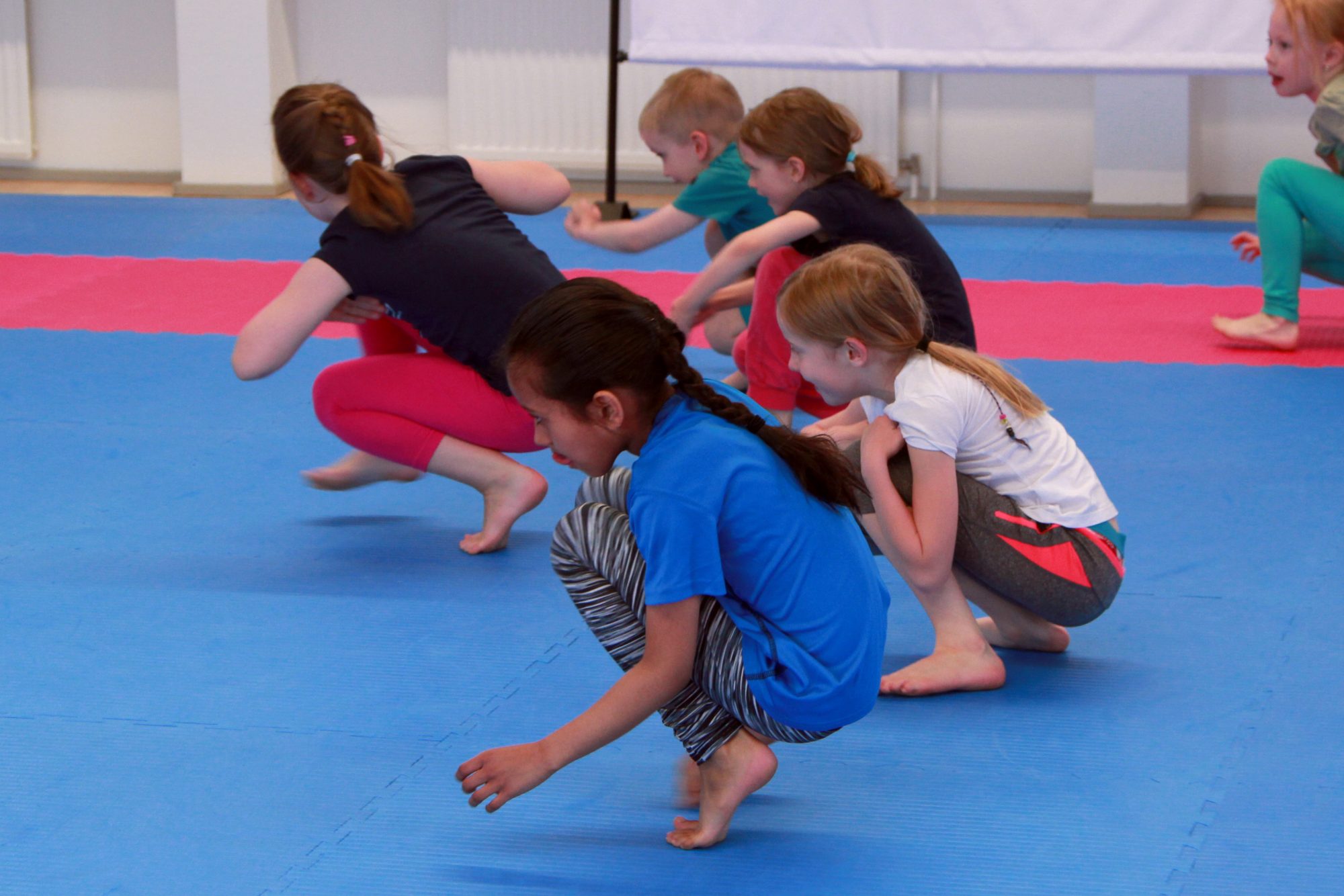
Rotational activities like spinning, rolling, or turning provide intense stimulation to the vestibular system, the inner-ear sensory apparatus that detects motion, head position, and spatial orientation. This rotary input informs the neurological bedrock for visual stability, emotional self-regulation, and spatial reasoning.
Manipulative skills activities

Manipulative Skills

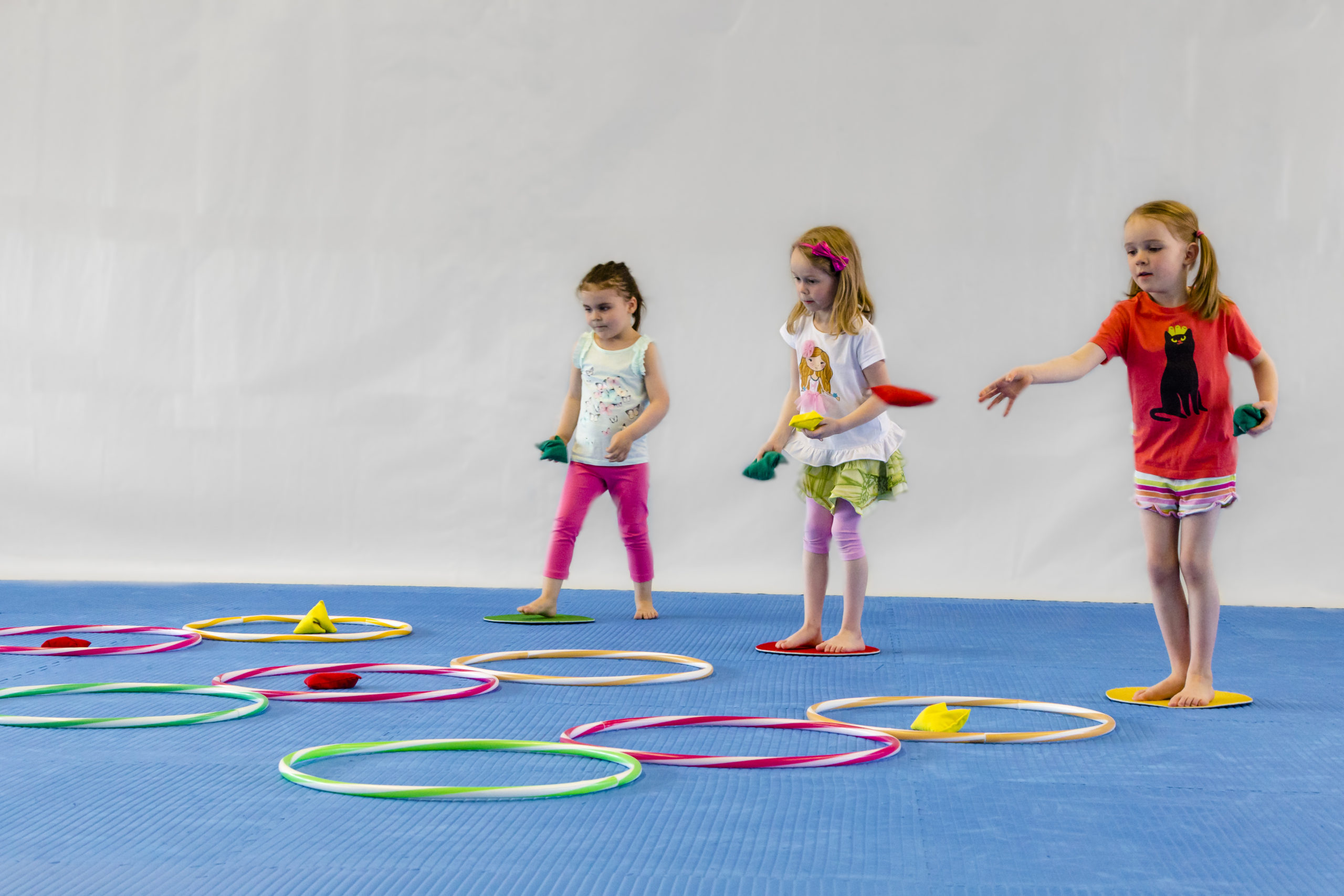
Rolling Throwing Catching
Bouncing Kicking Striking
Pushing Pulling Aiming

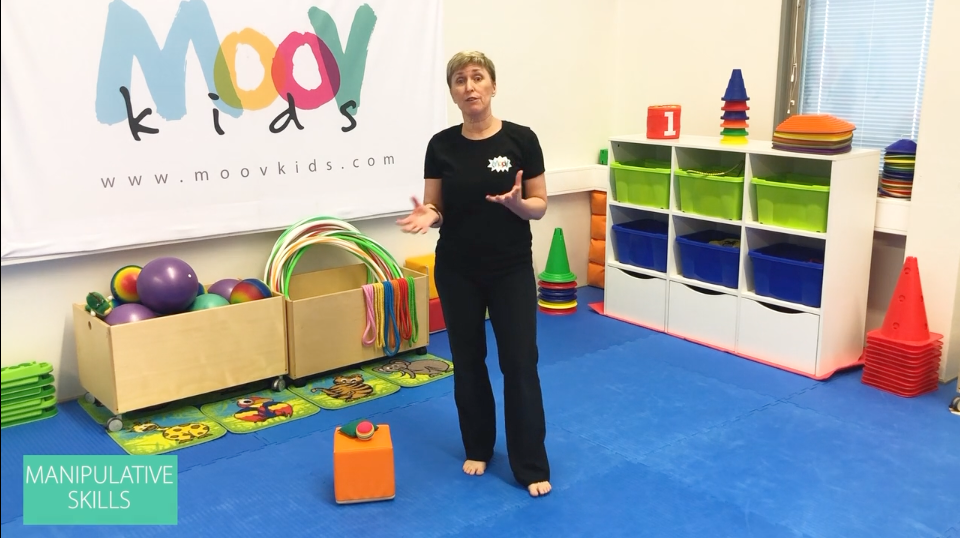
Tracking moving objects trains eye muscles to read text smoothly without skipping words. Catching and kicking develop real-time working memory by combining visual processing with motor coordination. Predicting and controlling trajectories strengthens motor planning and step-by-step mathematical problem-solving.
Teaching Activities

Children learn movement through experience, repetition and progression

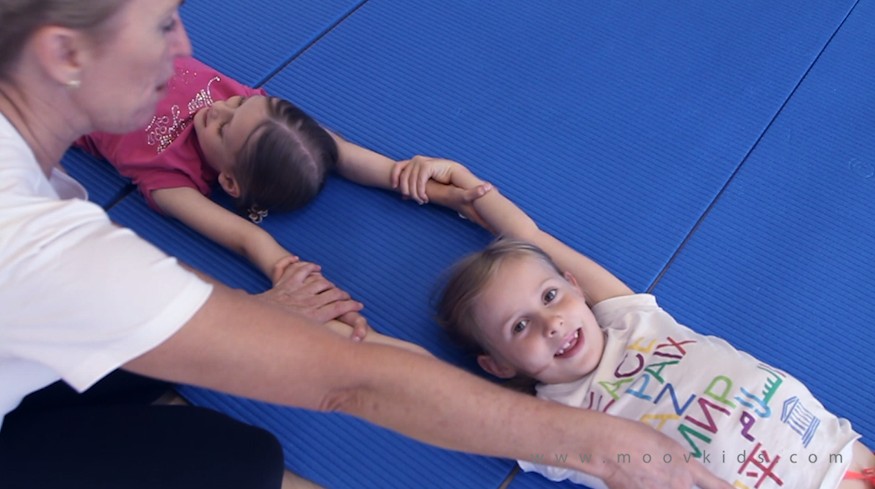
If children practice movement with an enthusiastic, knowledgeable adult, the experience is more joyful. They are then more likely to remember and benefit from the experience.

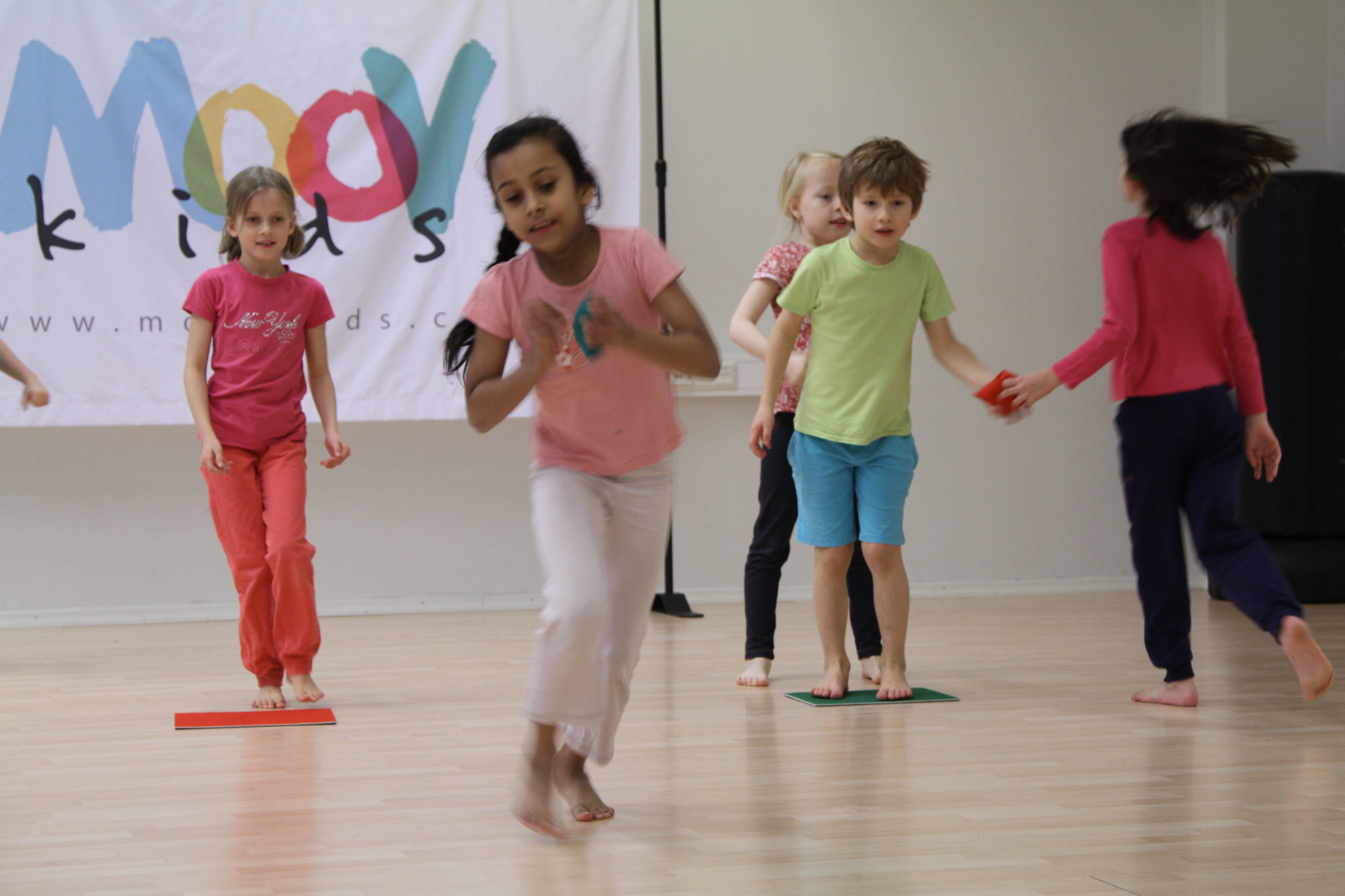
Repetition builds physical competence and confidence. Repeating an activity using the same progressive steps each time helps a child achieve it competently and confidently. The more a child repeats an activity, the easier the body and brain remember it.

Adding complexity helps a child progress. Once an activity is mastered, you can add trajectories to increase the difficulty level. However, it is also important to let a child repeat an activity they can do well. They gain satisfaction and a sense of accomplishment from doing so.

The crucial connection between the body and the brain

The earlier a child moves, the more likely they are to develop all-round body coordination and balance. This results in a mature vestibular and nervous system, without which learning can be challenging.

Movement develops the brain’s architecture, and neither the body nor the brain can develop well without the other. Daily movement is urgent if we ever hope to reduce the ever-growing number of children with learning and coordination difficulties.

MoovKids was born of a passion to make a difference, and as the content on this page shows, one should not underestimate the power of a single movement activity and the benefits it offers for brain and body development.

relay

Turn movement knowledge into everyday practice

Understanding why movement matters is only the beginning. The next challenge is knowing what to do, how to teach it and how to make movement part of a realistic routine.

MoovKids gives parents, educators and organizations practical movement activities, demonstrations and resources designed to make purposeful movement easier to use with young children.

MoovKit

For individuals who want practical movement activities and guidance to use with children.

MoovCenters

For kindergartens, schools and other organizations that want ongoing access to movement activities, instructional videos and educator resources.

MoovEducators

For organizations that want a more guided experience with training, implementation support, mentoring and help making movement part of everyday practice. 

Frequently asked questions

Movement is integral to healthy child development. Research shows that physical activity plays a crucial role in developing executive function, memory, attention, and social skills through stimulating neuroplasticity.

Research on classroom-based physical activity suggests that medium- to high-intensity movement, such as running or jumping improves concentration. A short burst of aerobic movement — a brain break — enhances concentration, cognition and memory.

Movement activities help young children develop their working memory as they listen to instructions and remember the movement sequences they must achieve. Research also shows that medium-intensity movement after a learning session improves recall.

Movement is the foundation for all learning. Different types of movement benefit particular learning areas: cross-lateral movement helps with reading, language processing and writing. Spatial- and temporal-awareness activities support mathematics and cardiovascular exercise improves attention.

Fundamental movement skills are basic skills that build the foundation for learning more complex physical activities. These include LOCOMOTOR: running, jumping, hopping, STABILITY: balancing, rolling, spinning and OBJECT CONTROL: throwing, catching, striking, for example.

The recommendation in Finland, where MoovKids is based, is three hours a day. This includes one hour of intensive movement such as running, skipping and jumping, and two hours of medium-intensity movement such as walking or playing outdoors. Daily calm playtime is also important, as it reduces prolonged sitting.

Research & further reading

The relationship between physical activity, movement skills and learning is an active area of research. The sources below provide further reading on executive function, classroom behavior and educational outcomes.

Help children build strong foundations through movement.

You do not need complicated equipment or a sports background to begin. Start with simple, purposeful activities that give children opportunities to move, think, practice and participate.

MoovKids can help you turn those opportunities into a practical part of everyday learning.